Media shapes our understanding of the world by framing information through ideological lenses.
Üyeler sınırsız test çözer, dersi dinler, Bir'e Bir ders alır ve ilerlemesini görür. Üye olmadan 20 dakika deneyebilirsin.
Media and Ideology: The Connection

Media does not simply report facts; it often presents information through particular ideological perspectives. Ideology refers to a system of ideas and beliefs that shape how people interpret the world. Media outlets may consciously or unconsciously promote certain ideologies by selecting which stories to tell and how to tell them.
For example, a news channel might emphasize economic growth to support a capitalist ideology or focus on social justice issues to promote progressive values. Recognizing this helps us understand that media content is not neutral but influenced by underlying beliefs and power structures.
Örnek
Imagine two newspapers reporting the same protest: one describes it as a 'peaceful demonstration for rights,' while the other calls it a 'disruptive riot.' These descriptions reflect different ideological positions affecting how the event is perceived.
Framing in Media: How Stories Are Told

Framing is the process by which media organizes and presents information to highlight certain aspects over others. This influences the audience’s interpretation by emphasizing specific details, angles, or contexts. Frames can be positive, negative, or neutral depending on the intended message.
For example, crime news can be framed to evoke fear by focusing on violence, or to promote understanding by highlighting social causes. Understanding framing helps us see beyond the surface of media messages to the choices behind them.
Örnek
A television report about unemployment might frame the issue as a result of individual laziness or as a consequence of economic policies. Each frame leads to different conclusions and solutions.
Media Discourse and Implicit Meaning
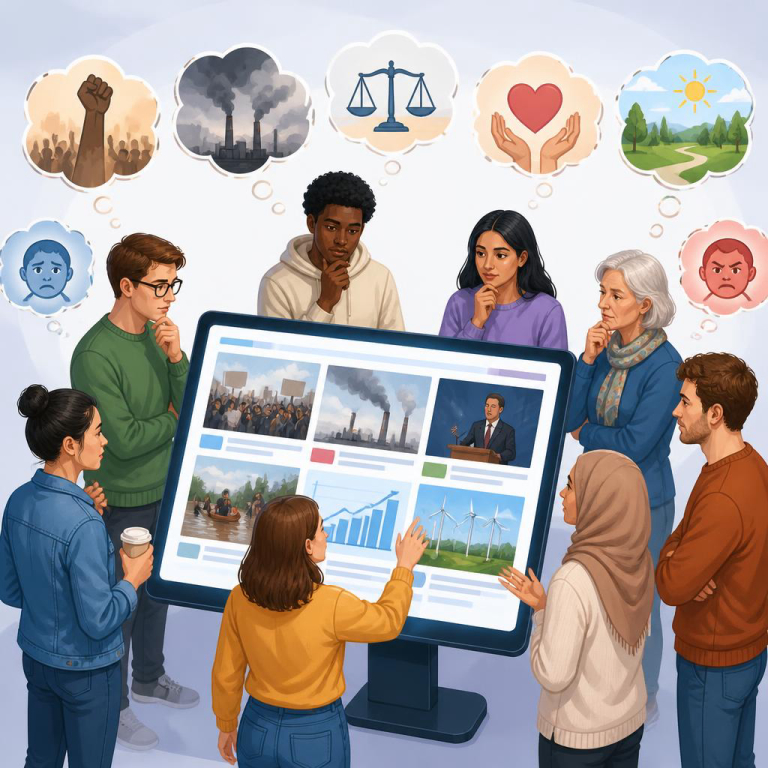
Media discourse includes not only explicit statements but also implicit meanings conveyed through language, images, and symbols. These hidden messages can reinforce stereotypes, biases, or ideologies without being directly stated.
For instance, the choice of words, tone, or visual cues can subtly influence how audiences perceive people or events. Being aware of these implicit meanings allows us to critically analyze media content beyond its obvious message.
Örnek
A news article describing a political leader as 'strong' versus 'stubborn' carries different implicit evaluations that shape public opinion.
The Complex Relationship Between Media, Ideology, and Framing
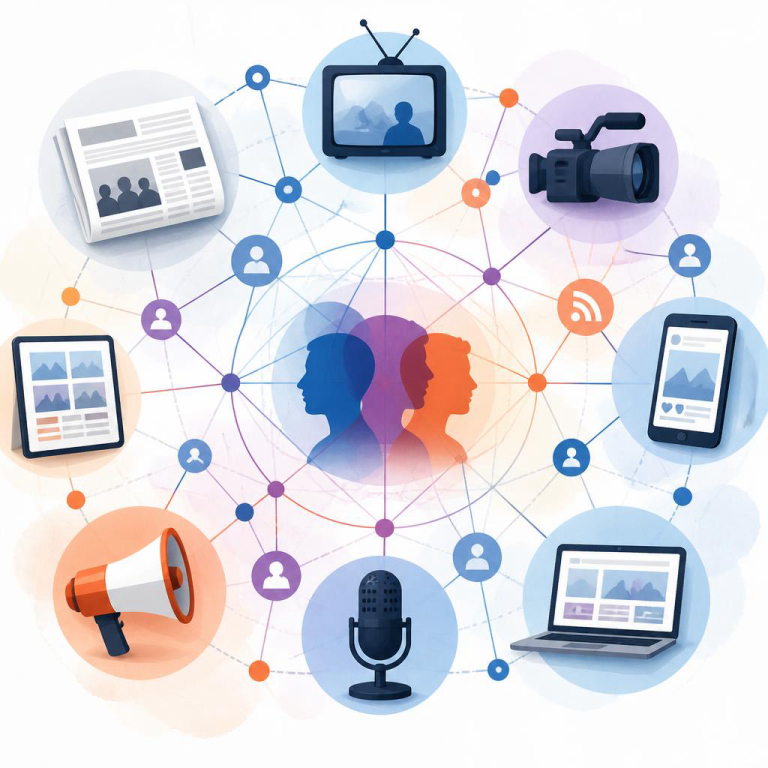
Media, ideology, and framing are interconnected concepts that work together to shape public discourse. Ideologies influence how media frames stories, and framing reinforces ideological perspectives. This cyclical relationship affects how society understands and discusses issues.
Recognizing this complexity helps us see that media messages are constructed, not accidental. It encourages a more nuanced approach to consuming media, questioning whose interests are served by certain frames and ideologies.
Örnek
Consider climate change coverage: some media frame it as a scientific crisis demanding urgent action (environmentalist ideology), while others present it as a debatable issue to protect economic interests (conservative ideology).
Media Discourse and Social Interaction

Media discourse shapes not only individual opinions but also social interactions and public debates. Through shared narratives and frames, media influences how communities discuss and respond to social issues. This can promote solidarity or create divisions.
For example, social media platforms enable users to spread media messages rapidly, amplifying their impact on social attitudes and behaviors. Understanding media discourse’s role in social interaction helps us navigate digital communication responsibly.
Örnek
A viral news story framed as a human interest piece can mobilize public support for a cause, demonstrating media’s power in shaping collective action.
Sık yapılan yanlışlar
- Yanlış: Media always presents objective and unbiased information. Doğrusu: Media content is often influenced by ideological perspectives and framing choices, making it subjective to some extent.
- Yanlış: Framing means lying or fabricating news. Doğrusu: Framing involves selecting and emphasizing certain aspects of a story, not necessarily fabricating information.
- Yanlış: Implicit meanings in media are accidental and unimportant. Doğrusu: Implicit meanings are often deliberate and can significantly influence audience perceptions.
- Yanlış: Ideology is always obvious and explicitly stated in media. Doğrusu: Ideological influences are often subtle and embedded within framing and discourse.
- Yanlış: Media has no effect on social interactions or public opinion. Doğrusu: Media discourse plays a crucial role in shaping social attitudes and collective behavior.
Bir adım ileri
At higher levels, students explore critical discourse analysis and how power relations are embedded in media language. They learn to identify complex ideological patterns and use theoretical frameworks to analyze media texts. This deepens their ability to question media influence and participate in informed debates about social and political issues.
Özet
Media shapes our worldview through ideological framing and implicit meanings. Understanding these concepts helps us critically analyze information and recognize biases. This awareness is essential for responsible media consumption and active social participation.