Relative Clauses
Ders videosu
Konu anlatımı
İngilizce - Relative Clauses

Bu derste ne öğreneceğiz?
Bu derste, İngilizce'deki relative clauses (ilgi cümlecikleri) konusunu öğreneceğiz. Relative clauses, cümlelerde nesne veya özne hakkında daha fazla bilgi vermek için kullanılır. Bu yapının nasıl oluşturulduğunu, hangi durumlarda kullanıldığını ve örneklerle pekiştireceğiz.
Üyeler sınırsız test çözer, dersi dinler, Bir'e Bir ders alır ve ilerlemesini görür. Üye olmadan 20 dakika deneyebilirsin.
Temel kavramlar
Relative clauses, bir cümlede bir ismi veya bir durumu tanımlamak için kullanılan yan cümlelerdir. Genellikle "who", "which", "that" gibi bağlaçlarla başlarlar. Bu bağlaçlar, cümledeki ana cümle ile yan cümle arasındaki ilişkiyi kurar.
Ayrıntılı anlatım
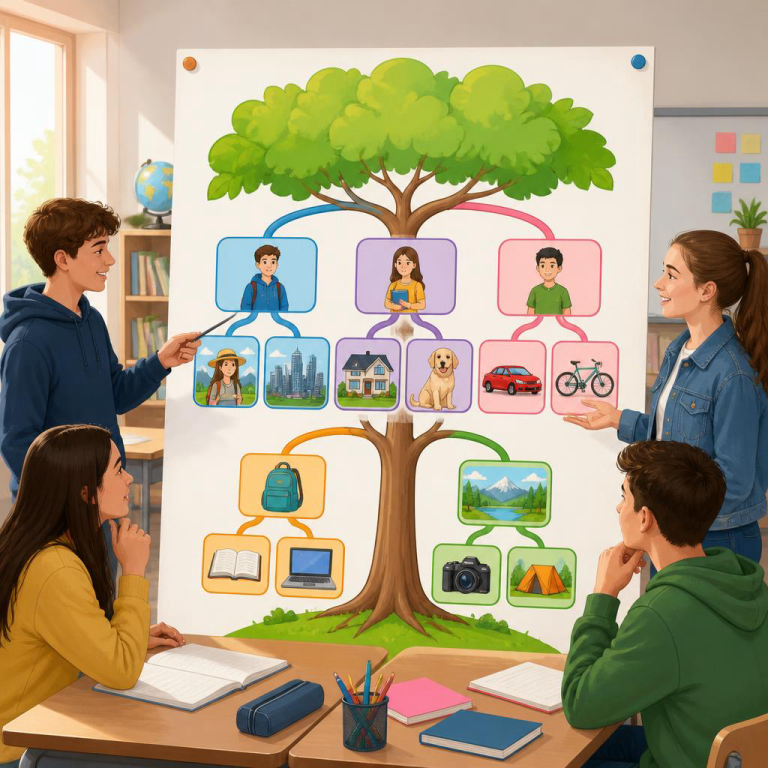
Relative clauses iki ana türde bulunur: defining (tanımlayıcı) ve non-defining (tanımlayıcı olmayan) relative clauses. Defining relative clauses, cümlede bahsedilen nesnenin kim olduğunu veya ne olduğunu belirtir. Non-defining relative clauses ise ek bilgi sağlar ve cümledeki anlamı değiştirmez.
Defining Relative Clauses
Defining relative clauses, cümledeki ismi tanımlamak için kullanılır. Örneğin:
- The book that I borrowed is interesting. (Ödünç aldığım kitap ilginç.)
- The man who lives next door is a doctor. (Yan komşum doktor.)
Bu örneklerde "that" ve "who" bağlaçları, hangi kitabın veya adamın kastedildiğini belirtir.
Non-defining Relative Clauses
Non-defining relative clauses, cümledeki isme ek bilgi verir. Bu tür cümlelerde virgül kullanılır. Örneğin:
- My brother, who is a teacher, lives in London. (Öğretmen olan kardeşim Londra'da yaşıyor.)
- The Eiffel Tower, which is in Paris, is very famous. (Paris'te bulunan Eyfel Kulesi çok ünlüdür.)
Bu örneklerde, ek bilgi verildiği için cümle anlamı değişmez.
Çözümlü örnekler


Aşağıda relative clauses ile ilgili bazı örnekler ve çözümleri bulunmaktadır:
Örnek 1
Complete the sentence with a relative clause:
The girl __________ (play the piano) is my sister.
Çözüm: The girl who plays the piano is my sister.
Örnek 2
Rewrite the sentence using a relative clause:
The car is very fast. It belongs to my father.
Çözüm: The car that belongs to my father is very fast.
Örnek 3
Combine the sentences using a relative clause:
The movie was exciting. We watched it last night.
Çözüm: The movie that we watched last night was exciting.
Sık yapılan hatalar
Relative clauses kullanırken sık yapılan hatalardan bazıları şunlardır:
- Defining relative clauses'da virgül kullanmak.
- Who ve which kelimelerini yanlış kullanmak.
- Relative clause'da "that" yerine "who" kullanmak.
Uygulama
Aşağıdaki cümleleri relative clauses kullanarak tamamlayın:
- The teacher __________ (give us homework) is very strict.
- The book __________ (be on the table) is mine.
- The students __________ (study hard) will pass the exam.
- The restaurant __________ (we went to) was amazing.
- The woman __________ (talk to my brother) is my aunt.
Mini test
Aşağıdaki soruları cevaplayın:
- What is a defining relative clause?
- Give an example of a non-defining relative clause.
- Which relative pronoun would you use for things?
- Can you use "that" for people in defining relative clauses?
- What punctuation is used with non-defining relative clauses?
Cevap anahtarı
- A defining relative clause is used to specify which person or thing we are talking about.
- An example of a non-defining relative clause: My brother, who is a teacher, lives in London.
- You would use "which" for things.
- Yes, you can use "that" for people in defining relative clauses.
- Commas are used with non-defining relative clauses.
Özet
Bu derste relative clauses'ın tanımını, kullanımını ve örneklerini öğrendik. Defining ve non-defining relative clauses arasındaki farkları anladık. Ayrıca, sık yapılan hataları ve uygulama alıştırmaları ile konuyu pekiştirdik.
Örnek sorular
- The teacher
- who teaches us
- is very kind
- teaches us
Cevabı göster
- To add extra information
- To ask questions
- To give commands
- To express emotions
Cevabı göster
- The book I read was fascinating.
- The book that I read was fascinating.
- The book which I read was fascinating.
- The book, which I read was fascinating.
Cevabı göster
- The man whom I met yesterday was friendly.
- The man who I met yesterday was friendly.
- The man that I met yesterday was friendly.
- The man which I met yesterday was friendly.
Cevabı göster
- The book that I borrowed is on the table.
- My brother, who lives in London, is visiting.
- The car, which is red, is mine.
- The teacher, who is very kind, helps us.